


Recycling advice for the office

Paper, coffee cups with little sipping lids, paper, Judy's bun cases, paper, huge amounts of wrapping from lunchtime, oh, and paper. There's no way around it, the day-to-day life of an office produces huge amounts of waste. Here's how to cut down on it.
Start at the beginning
The less you use, the less you have to recycle. Starbucks may insist on giving you a new cup every time you go, but we can save on the rest.
Email, email, email; even memos and other little notes can be emailed or texted. This reduces the number of little post-it notes all over the place, and there’s definitely no need for the A4 sheets with two lines scrawled across the top. Additionally, employing double-sided (duplex) printing is more efficient; it looks stylish and cuts down your printer's paper usage by a lot.
Each office worker is different, but everyone can benefit from a little bit of careful thought and efficiency. Reuse paper clips, double check if pens really are used up before throwing them away, and think proactively about saving resources.
As for the Starbucks problem, there are also a lot of really chic coffee flasks out there, and some coffee shops even give you money off for bringing one in for your lunchtime latte.
Wait, that's not the beginning
Try to procure as much of your material as possible from recycled and/or recyclable sources. If you're a procurement manager or an executive, shop around and see what you can do. If you can’t find anything suitable, a recommendation can never be a bad thing.
The bins, the bins
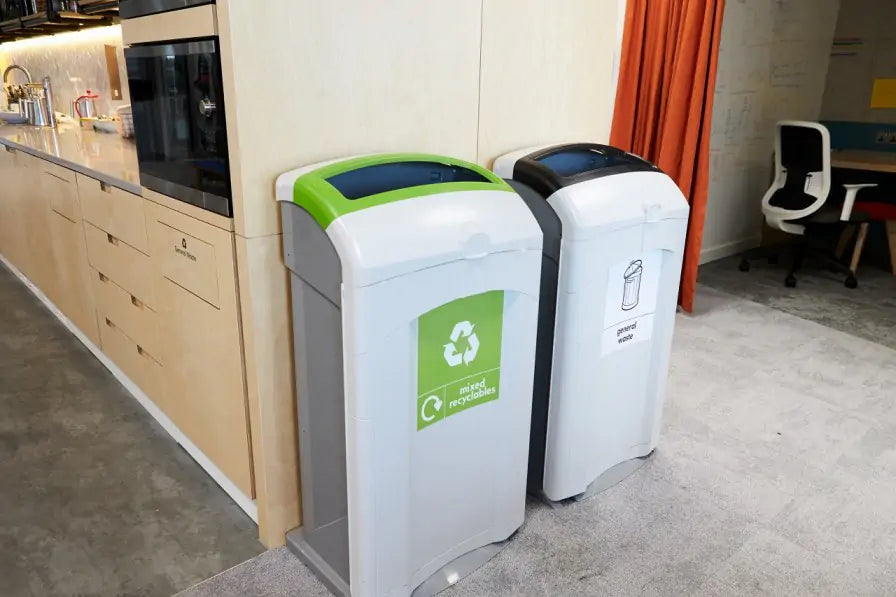
If your office has recycling bins, make sure they are set out, used and handled properly. A recycling system is only as good as the people who run and use it. Clearly labelled, conveniently located bins that everyone can access and recognise make the difference between a simple day-to-day recycling regime and a clutter of rubbish that all ends up in one place. It's important that everyone knows what goes in where and colour-coordinated bins can help vastly with this.
Office bins are crucial in ensuring waste is segregated. Studies have shown as much as an 80% increase in recycling just by having clearly signed bins in the right locations. Mixed recycling collections are also cheaper than general waste, so it literally pays to recycle more. Since the 2025 recycling regulations in the UK, every business must have a mixed recycling bin next to a general waste bin as a minimum requirement.
Waste not, want not
No matter how hard you try to reinterpret the recycling guidance, some things just won't go in those bins. But fear not, there are always businesses and charities eager to take used office furniture, clothing and decorations. While individual donors and sellers may have to take the objects in question to the organisation's nearest pick-up point, businesses such as offices with a lot of goods can request a pickup. The office has its used goods conveniently taken away for free, helping the environment in the process.


